

Are ETFs Better Than Stocks? Key Differences, Risks and Which Is Better
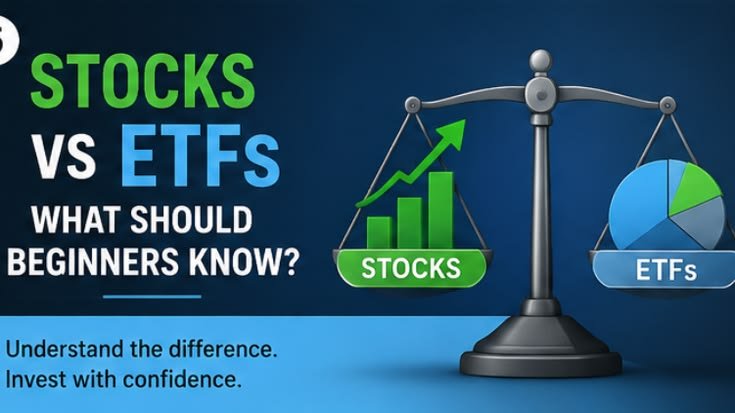
Choosing between individual stocks and exchange-traded funds (ETFs) is one of the first decisions many investors face. Stocks can offer higher growth potential when a company performs well, while ETFs can provide diversification by holding a basket of investments.
So, are ETFs better than stocks? There is no single answer. The better choice depends on an investor’s goals, risk tolerance, investment knowledge and time horizon.
What Is an ETF?
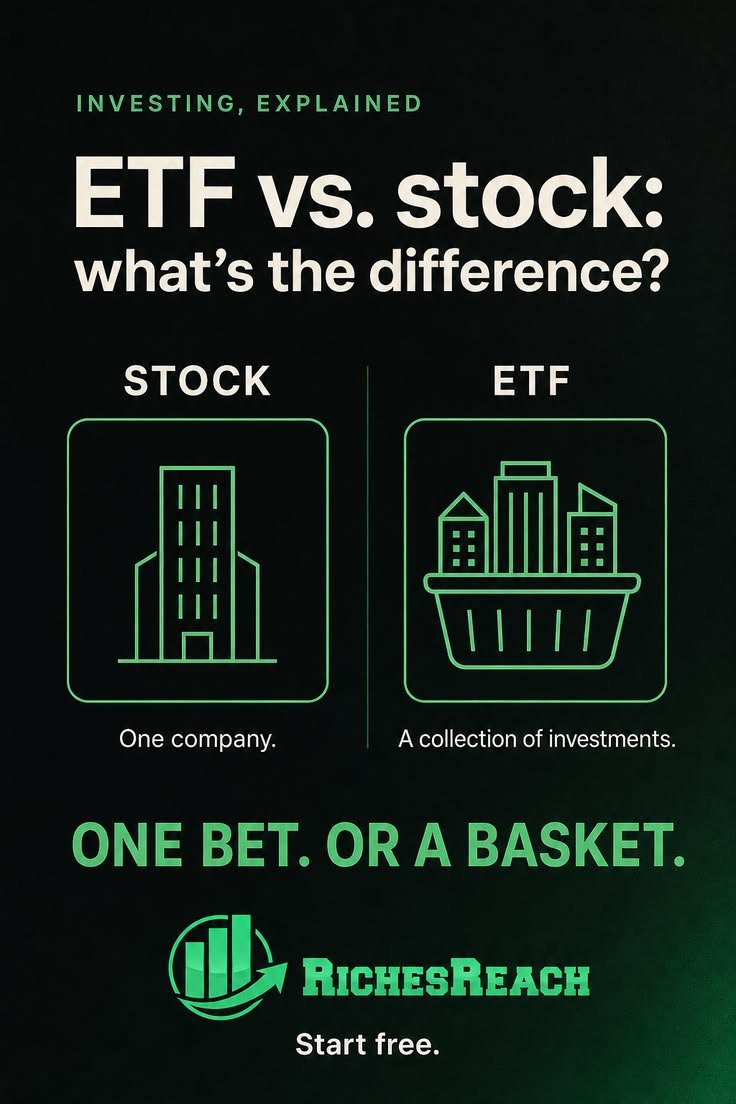
An ETF, or exchange-traded fund, is an investment fund that trades on a stock exchange like an individual stock. Instead of buying shares of just one company, an ETF can hold dozens, hundreds or even thousands of stocks or other assets.
For example, an index ETF may track an index such as the S&P 500 or Nifty 50. By buying one unit of the ETF, an investor gets exposure to many companies through a single investment.
What Is an Individual Stock?
When you buy an individual stock, you purchase an ownership stake in one company. Your investment performance depends largely on that company’s earnings, business growth, valuation and other factors.
If the company performs very well, the stock could generate strong returns. However, poor company performance can also lead to significant losses.
Are ETFs Better Than Stocks?
For many investors, ETFs can be easier to manage because they provide diversification in a single investment. Instead of trying to select individual companies, investors can buy an ETF that follows a broad market index.
Stocks may be more suitable for investors who are comfortable researching individual companies and accepting higher company-specific risk.
The key difference is diversification.
With one stock, the investment is concentrated in one company. With a diversified ETF, the investment is spread across multiple securities.
Is It Better to Buy Stocks or ETFs?
The answer depends on the investor.
Stocks may suit investors who:
- Enjoy researching individual companies
- Understand company financial statements and valuations
- Are comfortable with higher individual-company risk
- Want direct exposure to specific businesses
ETFs may suit investors who:
- Want diversification
- Prefer a simpler investment approach
- Do not want to research individual companies
- Are investing for the long term
Some investors also use both. They may use broad-market ETFs as a core investment while keeping a smaller portion of their portfolio in individual stocks.
Are ETFs Good for Beginners?
ETFs can be a useful starting point for beginners because a diversified ETF can reduce the risk associated with relying on a single company.
However, ETFs are not automatically safe. Their value can fall when the underlying investments decline. A sector ETF, for example, can be heavily affected if that particular industry performs poorly.
Beginners should understand what an ETF owns, what index or strategy it follows, its expense ratio and how closely it tracks its benchmark.
Are ETFs Better Than Stocks for Long Term?
For long-term investors, diversified ETFs can be attractive because they spread investment across multiple companies and can reduce company-specific risk.
A broad-market ETF can provide exposure to a large group of businesses without requiring the investor to select each stock individually.
However, long-term performance still depends on the underlying assets. An ETF does not eliminate market risk, and past performance does not guarantee future returns.
Are ETFs Better Than Stocks in India?
For Indian investors, ETFs are available across several categories, including broad market indexes, sector indexes, gold and other investment themes.
An investor considering an Indian ETF should examine factors such as:
- The index or assets tracked
- Expense ratio
- Tracking difference
- Trading volume and liquidity
- Bid-ask spread
- Fund size
- Tax implications
For example, a Nifty-based ETF can provide exposure to multiple companies in the index through one investment. Buying an individual stock provides exposure to only that company.
Is It Good to Invest in ETFs in India?
ETFs can be useful for Indian investors who want market exposure and diversification. They can also be traded during market hours through a stock exchange.
However, investors should not choose an ETF simply because it is an ETF. Different ETFs have different strategies, costs, liquidity and risks.
Before investing, it is worth checking the fund’s objective, holdings, expense ratio and tracking performance.
What Are the Disadvantages of ETFs?
ETFs have several potential disadvantages.
Market risk: ETFs can lose value when the underlying market or assets fall.
Tracking error: An ETF may not perfectly match the performance of the index it tracks.
Liquidity: Some ETFs have low trading volumes, which can make buying or selling less efficient.
Costs: Although many ETFs have relatively low expenses, investors still need to consider expense ratios and trading costs.
Limited control: When buying an index ETF, investors cannot choose which individual companies are included.
What Is the Downside of Owning an ETF?
The main downside of owning an ETF is that diversification does not remove investment risk. If the market or sector tracked by the ETF falls, the ETF can also decline.
Some ETFs can also be concentrated in a particular sector, theme or asset. Therefore, investors should understand exactly what they are buying rather than assuming every ETF is broadly diversified.
ETFs vs Stocks: Which One Is Better?
There is no universal winner.
For investors who want diversification, simplicity and long-term market exposure, ETFs can be a practical choice. Individual stocks may appeal to investors who want to select specific companies and are willing to accept greater company-specific risk.
The right decision depends on the investment objective, risk tolerance, research ability and time horizon.
N.B:This article is for informational and educational purposes only and should not be considered financial advice.
Frequently Asked Questions
Are ETFs better than stocks?
ETFs can be better for investors who prioritize diversification and simplicity. Individual stocks may be preferable for investors who are comfortable researching and selecting companies.
Are ETFs good for beginners?
Yes, diversified ETFs can be suitable for beginners, but investors should understand the ETF’s holdings, costs and risks before investing.
Are ETFs better than stocks for long term?
Diversified ETFs can be useful for long-term investing because they spread exposure across multiple securities. However, they still carry market risk.
Is it good to invest in ETFs in India?
ETFs can provide Indian investors with convenient exposure to indexes, sectors and other assets. The suitability depends on the ETF and the investor’s goals and risk tolerance.